

THE BUYER'S GUIDE / SELECTION
Choosing a Tee Making Machine: Working Requirements and Integration Fit
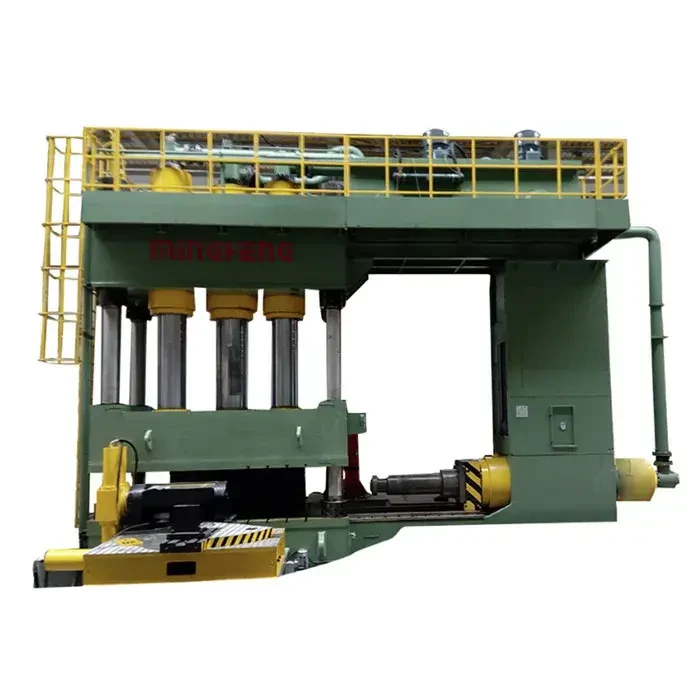
Selecting the right tee making machine depends on pipe size range, material grade, wall thickness, production volume, and how well the machine integrates with existing hydraulic and control systems. This guide explains the key purchase criteria buyers should evaluate and maps confirmed product specifications to those requirements, helping procurement teams and project engineers make a well-grounded decision.

Size range and material compatibility: the machine must cover the required pipe OD range and support the necessary material grades (carbon steel, stainless steel, alloy steel) and wall thickness before it is evaluated on any other attribute.
Production capacity and cycle efficiency: throughput in kg/hour and pieces per cycle must match target output volumes; operating mode flexibility (manual, semi-automatic, automatic) affects staffing and scheduling requirements.
Hydraulic system design and PLC control integration: servo-driven proportional valve hydraulics, synchronization precision, motor power ratings, and touch-screen PLC parameter storage directly affect forming accuracy, energy consumption, and maintenance fit with the buyer's existing workshop infrastructure.
Why the Right Tee Making Machine Matters
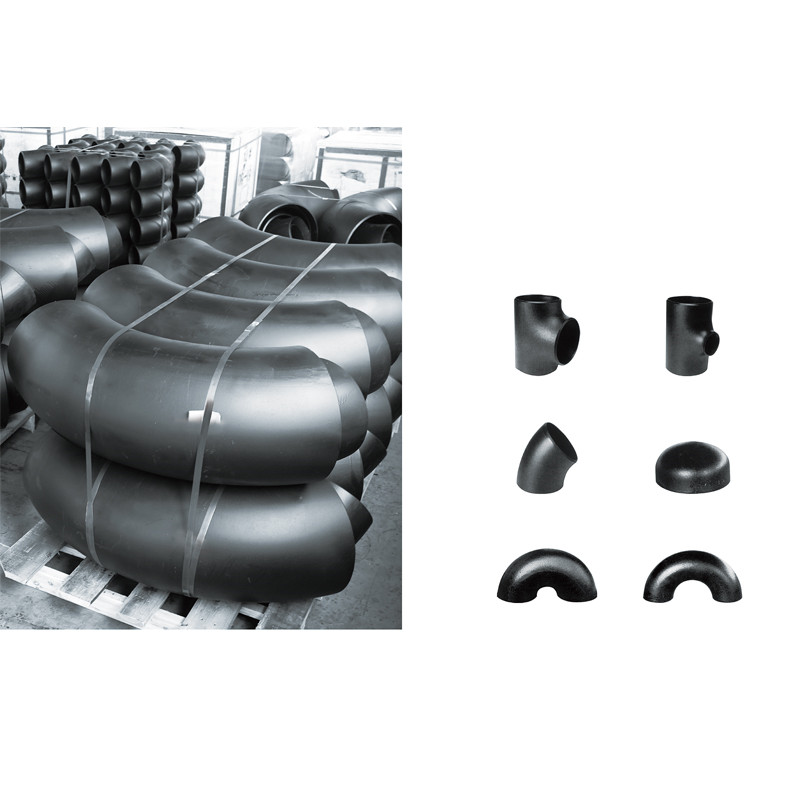
A tee making machine converts straight pipe into branch fittings — straight tees and reducing tees — used in oil and gas delivery pipelines, power plant construction, petrochemical systems, and sanitary applications. Buying the wrong machine means either under-capacity production, incompatible tooling, or excessive energy costs. Because the machine becomes a fixed asset in a fabrication line, the selection decision requires careful matching of working parameters to your actual job scope before any purchase is made.
This guide draws on confirmed product specifications from Beijing Sinoworld Steel Material Co., Ltd. to explain what each criterion means in practice.
Key Selection Criteria
1. Size Range and Material Compatibility
The most fundamental criterion is whether the machine covers the pipe outer diameter (OD) and material grade you need to work with.
The confirmed cold forming tee making machine (Model GIL114) handles an OD size range of 17 mm to 114 mm (approximately ½″ to 4½″) with a maximum wall thickness of 8 mm and is capable of processing carbon steel, stainless steel, alloy steel, and certain copper steels. If your project calls for larger diameter tees — up to 28″ — the machine can be customized to handle those specifications; buyers with non-standard requirements should confirm the exact configuration before ordering.
For reference, tees produced on this class of machine are intended to comply with international standards including ASME B16.9, ASME B16.11, GB12459, JIS, DIN, and GOST, making them suitable for projects with cross-border or multi-standard requirements. However, compliance for any specific project or delivery should be verified independently.
Buyer checklist:
- What is the required OD range for your tee fittings?
- Which material grades (CS, SS, alloy) must be processed?
- What is the maximum wall thickness in your pipe schedule?
2. Production Capacity and Cycle Efficiency
For buyers running batch or continuous production, throughput matters as much as geometric capability.
The cold forming tee making machine has a stated work capacity of 455 kg/hour and a power consumption of 30 kW per ton. It can produce two tee fittings per forming cycle for small-diameter sizes, which significantly improves throughput when running smaller OD orders. The machine's three operation modes — manual, semi-automatic, and automatic — allow operators to tune the production pace to job complexity and staffing levels.
Buyer checklist:
- What monthly or daily output (kg or pieces) do you need to meet?
- Will you primarily run small-diameter or large-diameter tees?
- Do you need unmanned automatic cycles or will operators supervise each cycle?
3. Hydraulic System Design and Control Integration
The hydraulic architecture directly affects forming precision, energy consumption, and maintenance intervals.
The confirmed machine uses an advanced logical circuit hydraulic system with a servo motor and proportional valve, allowing automatic adjustment of oil flow and internal fluid forming pressure. This avoids the over-pressurization common in fixed-displacement pump designs. A micro pulse displacement transducer ensures synchronization precision across the two ram cylinders (Φ400 mm / Φ380 mm) with a valid travel of 400 mm and 300 mm respectively, all operating at 32 MPa working pressure.
The machine uses a two-grade oil pump system (63SCY-14 plunger pump + CB-32 gear pump) driven by two electric motors (Y-18.5 kW + Y-7.5 kW). Buyers should confirm that their facility supplies the correct voltage and that floor space accommodates the machine footprint of 2,700 mm × 800 mm × 2,700 mm (L×W×H) and a connected load that can support the hydraulic power units.
Buyer checklist:
- Can your electrical supply support the motor configuration (Y-18.5 kW + Y-7.5 kW)?
- Does your floor plan accommodate a 2.7 m × 0.8 m × 2.7 m machine envelope?
- Is servo-driven proportional control required for tight wall-thickness tolerances?
4. PLC and Touch-Screen Parameter Management
A tee forming machine must be programmable for different pipe sizes without manual retooling delays.
The cold forming tee making machine stores cold forming parameters — forming speed, pressure, and cycle time — in a centralized PLC system operated via a touch screen. Operators can call up a saved profile for a given pipe size and launch production without re-engineering hydraulic settings each time. This is especially valuable in job shops processing multiple pipe schedules in a single shift.
Buyer checklist:
- How many different pipe size / wall thickness combinations will you run?
- Is your workforce trained on PLC-based touch-screen systems, or is a simpler interface preferred?
5. Frame Construction and Long-Term Durability
The machine frame absorbs repeated high-pressure forming loads. Residual welding stress in the frame is a common cause of long-term fatigue cracking.
The confirmed design uses an integrated welding frame that undergoes heat treatment for stress relieving after fabrication, reducing the risk of fatigue failure under sustained production loads. Buyers evaluating competing machines should ask whether the frame goes through post-weld heat treatment (PWHT).
6. Operating Mode Flexibility and Safety
Facilities that mix prototype runs with full production benefit from machines that support multiple operating modes without hardware changes.
The cold forming tee making machine supports manual, semi-automatic, and automatic modes. Manual mode supports setup and die changeover verification. Automatic mode is suited to volume runs. The machine's servo motor contributes to lower noise levels compared to fixed-speed pump designs — an important factor in enclosed fabrication workshops.
Comparing Tee Forming with Elbow Cold Forming
Buyers setting up a complete pipe fitting fabrication line sometimes consider a tee forming machine alongside an elbow cold forming machine. The two machines share a similar cold-forming hydraulic philosophy but are optimized for different fitting geometries.
The confirmed cold forming elbow machine (model ZTW-219~325) targets a production capacity of Ø219 mm to Ø325 mm OD with wall thickness of 3–20 mm, a liquid working pressure of 25 MPa, and an overall machine footprint of 5,800 mm × 3,200 mm × 4,700 mm. It is designed to produce 90° and 45° elbows at R=1.0D and R=1.5D. Its much larger footprint, greater locking force (6,300 kN), and separate pushing system (3,150 kN) reflect the fundamentally different tooling loads involved in elbow forming versus tee extrusion.
If your production scope includes both tees and elbows, the two machines are not interchangeable — each is purpose-built. Plan floor space, power supply, and operator training separately for each machine type.
Hot Forming vs. Cold Forming: When Does It Matter?
Some fabrication applications require hot forming elbow machines that combine hydraulic push with induction heating (median-frequency heating systems). The confirmed hot forming elbow machine uses a 60 kW induction heating system and supports elbow types from 1D to 5D for OD up to 114 mm, with a ram stroke of 2 m.
Hot forming is typically applied when:
- The pipe material has limited cold-ductility (certain alloy grades).
- Very tight-radius (1D) elbows are required where cold forming would exceed the material's elongation limit.
- Very thick-wall pipe schedules are involved (e.g., Sch XXS).
Tee fittings, by contrast, are almost universally made by cold extrusion on a dedicated tee making machine, because the branch extrusion process benefits from the work-hardening effect of cold forming. A hot forming approach for tees is uncommon and is not covered by the confirmed product range reviewed here.
Integration Fit: Questions to Answer Before Ordering
| Integration Factor | What to Confirm |
|---|---|
| Power supply | Three-phase voltage and amperage capacity for Y-18.5 kW + Y-7.5 kW motors |
| Floor space | Minimum 2,700 mm × 800 mm footprint plus clearance for operator access and die storage |
| Die / mold compatibility | Whether existing molds from a previous machine are compatible with new ram cylinder diameters |
| Pipe feed logistics | How raw pipe blanks are staged and fed into the machine |
| Quality inspection | Whether in-line or off-line dimensional checks are required after forming |
| Standards compliance | Which project-specific standards (ASME, DIN, GOST, etc.) the finished fittings must meet |
Note: Pricing, delivery lead time, and certification documentation are not covered in this guide. Buyers should request that information directly from Beijing Sinoworld Steel Material Co., Ltd. prior to finalising a purchase order.
Summary
A tee making machine purchase decision should be anchored to five confirmed variables: pipe OD range, material grade, wall thickness, target output rate, and available floor space and power supply. The cold forming tee making machine confirmed by Beijing Sinoworld Steel Material Co., Ltd. covers OD 17–114 mm (with customization available to 28″), handles CS/SS/alloy/copper steel at up to 8 mm thickness, delivers 455 kg/hour, and fits within a 2.7 m × 0.8 m × 2.7 m envelope with a servo-driven PLC hydraulic system. Buyers with requirements beyond that confirmed range, or needing elbow forming capability, should evaluate the elbow cold forming machine separately. Do not assume that any machine covers requirements not explicitly confirmed in the source specifications.
THE PEOPLE

About the author
THE COMPANY
Beijing Sinoworld Steel Material Co., Ltd.
BEIJING SINOWORLD STEEL MATERIAL CO., LTD was established in 2012 and has nearly 15 years of global experience serving the OCTG, petrochemical, boiler, heat exchanger, shipbuilding, and automotive machinery manufacturing industries. Located in Beijing, the capital of China, our company supplies a full range of OCTG pipes ,Line pipes,Firefighting pipes,boiler tubes,Pipe fittings,flanges,vlaves,etc to customers worldwide.In addition, we have successfully obtained UL certification, further demonstrating our…
About Us ↗Visit company website ↗YOUR NEXT STEP
Bring your brief. Start a useful conversation.
Use case, specification, quantity and delivery window: make the next conversation specific.
Post time: Oct . 27, 2026 23:25


 English
 Arabic
 Bengali
 China
 French
 German
 Hausa
 Indonesian
 Italian
 Japanese
 Javanese
 Malay
 Persian
 Portuguese
 Punjabi
 Russian
 Spanish
 Swahili
 Telugu
 Vietnamese