Selecting a reliable partner for industrial piping requires more than just comparing price lists; it demands an understanding of how manufacturing tolerances and material certifications impact long-term operational safety. In sectors like oil and gas or petrochemicals, a single flaw in a pipe wall can lead to catastrophic systemic failure.
The global shift toward higher pressure ratings and more corrosive environments has forced a transition in how a tube factory manages quality control and surface treatment. Modern requirements now prioritize a synergy between metallurgy and precision machining to ensure seamless integration into complex pipelines.
This analysis examines the technical benchmarks for high-grade steel piping, focusing on the intersection of international standards and practical application to help engineers and procurement specialists make informed decisions.


Certification is the primary safeguard against material fatigue and premature corrosion. Standards such as API Spec 5L, ISO 3183, and GB/T 9711 are not merely suggestions but strict frameworks that dictate the chemical composition and mechanical behavior of the steel.
For an experienced tube factory, adhering to these standards means maintaining strict traceability from the raw billet to the finished pipe. This ensures that the carbon seamless steel pipes, often used in high-pressure gas or water conveying, maintain a consistent yield strength and tensile capacity across the entire production batch.
The internal architecture of a steel pipe is shaped by its process method. Hot finishing, hot expanding, and cold drawing each offer distinct advantages regarding dimensional accuracy and structural integrity. Cold drawing, for instance, typically provides a smoother surface finish and tighter tolerances, which are critical for high-precision fittings.
Material grades like ASTM A106 Gr.B and ASME SA106 Gr.B are engineered for high-temperature service, where thermal expansion and creep resistance are paramount. The interaction between the wall thickness (WT) — ranging from STD to SCH80 — and the outer diameter (OD) determines the pipe's ability to withstand internal pressure without deformation.
Consistency in the manufacturing process prevents "thin spots" in the pipe wall. When a factory utilizes advanced hot-expanding techniques, it can achieve precise OD specifications while maintaining the required structural ductility, ensuring the pipe can handle the stresses of field installation and bending.
Surface treatment is the final line of defense against environmental degradation. Depending on the soil chemistry or the fluid being transported, different coatings are required to prevent oxidation and electrochemical corrosion.
The effectiveness of a coating system is measured by its adhesion strength and permeability; solutions like 3PE (Three-Layer Polyethylene) and FBE (Fusion Bonded Epoxy) are selected based on the trade-off between mechanical impact resistance and thermal stability.
While varnishing and galvanizing are suitable for mild environments, specialized pipeline projects often demand 3PP (Three-Layer Polypropylene) for higher temperature operations. The application process must be seamless, as any holiday or gap in the coating can lead to localized pitting and rapid failure.
When analyzing API 5L grade steel (such as X42 through X70), the primary focus is on the balance between strength and weldability. Higher grades offer greater pressure capacity but require more stringent welding procedures to avoid hydrogen-induced cracking.
A comprehensive evaluation framework assesses several relative indices to determine the suitability of a specific grade for a given environment. This involves weighing factors like corrosion resistance, ductility, and the ability to maintain structural integrity at ultra-low temperatures.
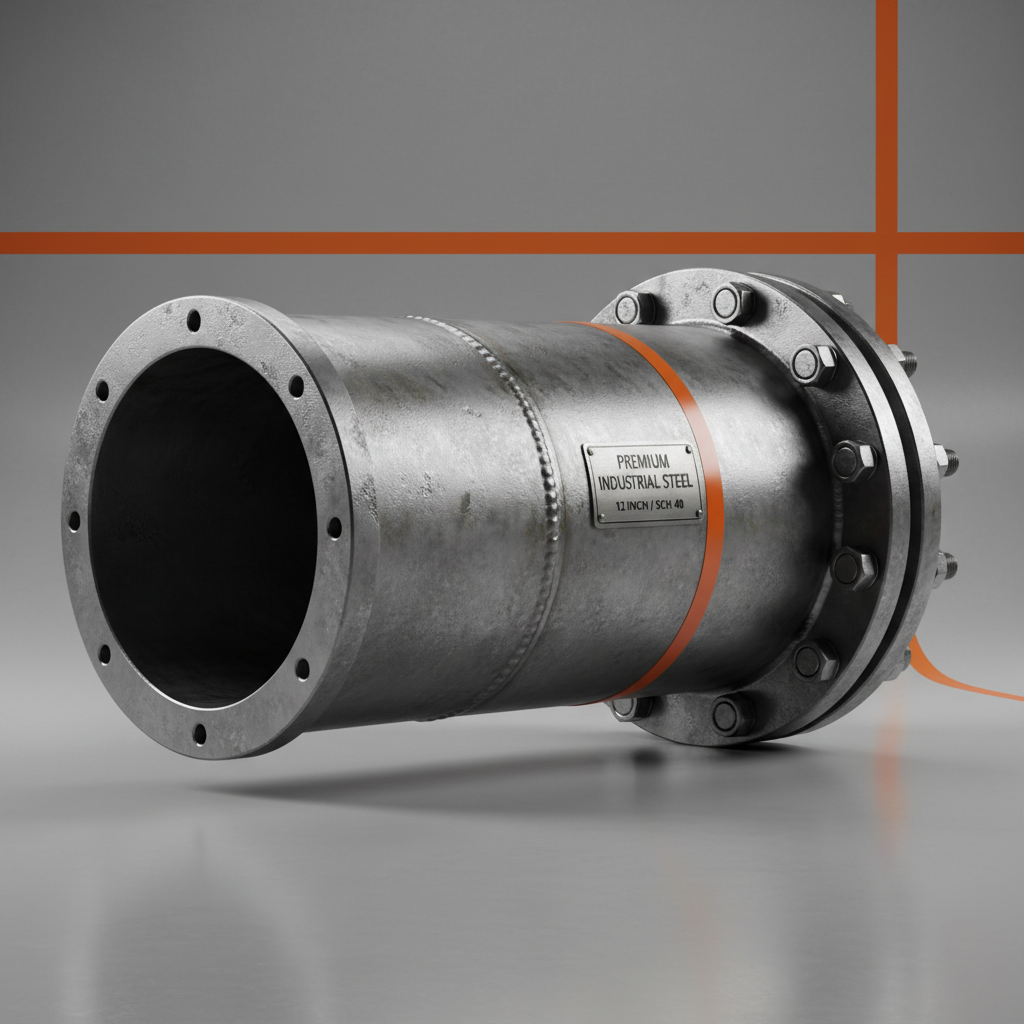
In a typical industrial setting, such as an oil refinery, the piping network must handle a variety of fluids with differing chemical properties. This necessitates a mix of carbon steel for general transport and stainless steel (such as 304L or 316L) for highly corrosive acidic streams. The integration of flanges and pipe fittings must be precise to prevent leaks at connection points.
For infrastructure projects like the Pakistan Petroleum Ltd Pipeline or similar large-scale energy corridors, the focus shifts to long-distance durability. Here, the use of 3LPE (Three-Layer Polyethylene) underground pipes becomes critical to protect the steel from soil-borne corrosion, while the pipe ends are typically beveled for high-integrity field welding.
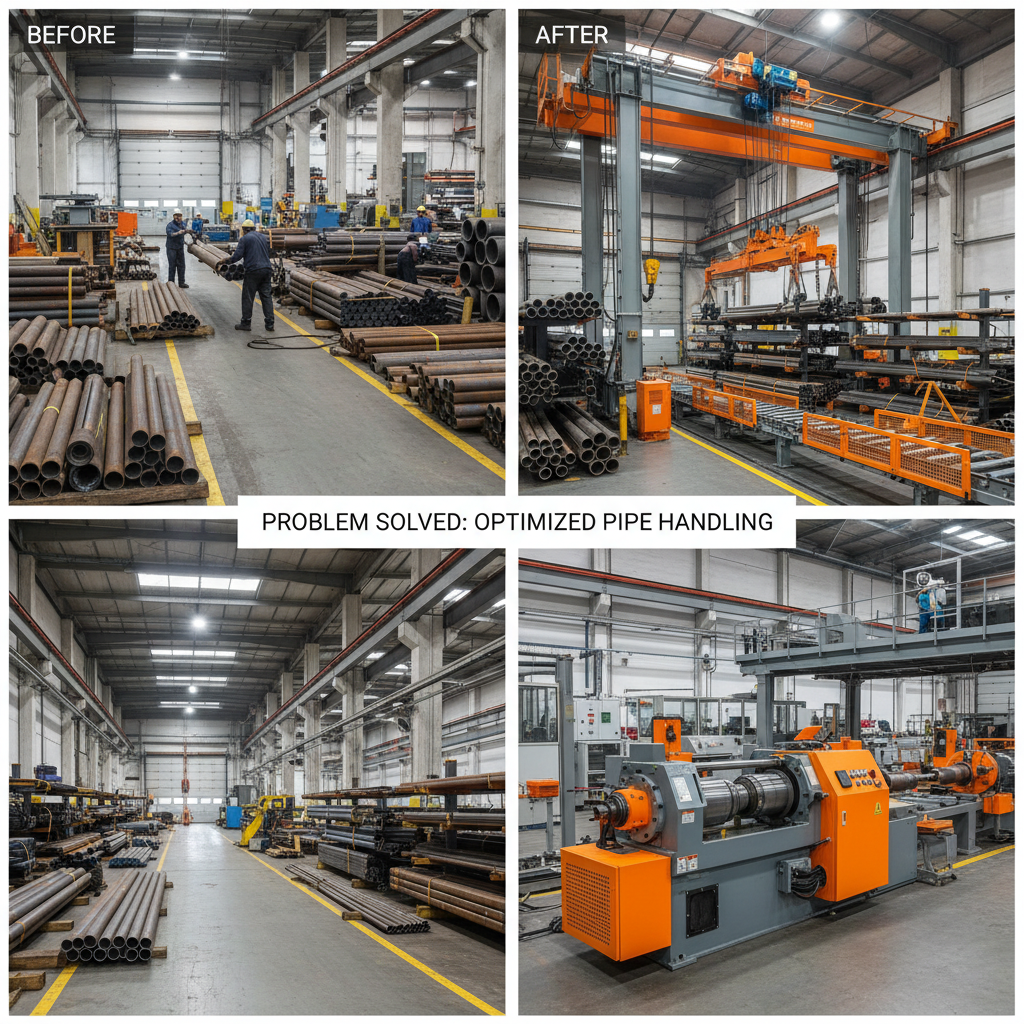
The industry is moving toward "total solution" provision, where the manufacturer does not just supply a tube but manages the deep processing. This includes U-shape processing, threading, grooving, and finning, which reduces the need for multiple subcontractors and minimizes the risk of damage during transit between facilities.
Digitalization of quality control is another significant shift. The implementation of automated ultrasonic testing and laser-based dimensional verification allows for a higher level of confidence in wall thickness consistency. This is particularly important for ultra-low temperature pipes (like A333 Gr.6) where any structural irregularity can lead to brittle fracture.
Moreover, there is an increasing demand for customized specifications. Rather than relying solely on generic standards, users are now requesting tailored alloy compositions to meet specific environmental challenges, pushing the manufacturing process toward greater specialization and agility.
Choosing the right partner involves evaluating the balance between certification, processing capability, and logistical reliability. A supplier that offers both the base tube and deep processing (like 3PE coating and galvanizing) typically provides better quality assurance than a fragmented supply chain.
Procurement specialists should evaluate the "technical depth" of the factory. Can they handle complex alloy pipes (such as P91 or 12Cr1MoV) for boiler applications, or are they limited to standard carbon steel? The ability to supply a full range of components, including flanges and gaskets, reduces project lead times.
The following table provides a conceptual framework for comparing different pipe specifications based on typical industrial requirements.
| Condition | Recommended Standard | Surface Treatment | Primary Consideration |
|---|---|---|---|
| High Pressure Gas | API 5L X65/X70 | 3PE / FBE | Yield Strength |
| High Temp Steam | ASTM A106 Gr.B | Varnished/Black | Thermal Creep |
| Cryogenic Fluid | A333 Gr.6 | Galvanized | Brittle Fracture |
| Corrosive Chemical | Stainless 316L | Pickled/Passivated | Pitting Resistance |
| General Water | ASTM A53 | Galvanized | Oxidation Rate |
| Oil Pipeline | API 5L Grade B | 3LPE / 3LPP | Wall Uniformity |
API 5L is specifically designed for line pipe used in the transportation of oil, gas, and water, focusing on weldability and strength across long distances. ASTM A106, conversely, is a standard for seamless carbon steel pipe intended for high-temperature service, such as in boilers and refineries, where thermal stability is more critical than long-distance tensile properties.
3PE (Three-Layer Polyethylene) provides a multi-layered defense: an epoxy primer for chemical adhesion and corrosion inhibition, a copolymer adhesive layer, and a high-density polyethylene outer shell for mechanical protection. This combination prevents moisture and oxygen from reaching the steel surface, significantly reducing the risk of external corrosion in underground environments.
Cold drawing is preferred when the project requires tighter dimensional tolerances, a superior surface finish, and increased yield strength through strain hardening. Hot finishing is generally more cost-effective for larger diameters and applications where absolute precision in wall thickness is less critical than overall material ductility.
Non-certified steel may contain impurities or inconsistent wall thicknesses that create stress concentration points. Under high pressure, these anomalies can trigger localized fatigue or sudden rupture. Certification ensures the material meets a known minimum yield strength and has undergone non-destructive testing (NDT) to verify structural integrity.
Evaluation should focus on their ability to provide integrated services like 3PE coating, threading, and beveling in-house. Check for certifications such as UL or ISO, and request a quality plan that outlines how they verify the thickness and adhesion of coatings and the precision of U-shape or grooving processes.
No, the choice of alloy depends on the specific environment. For example, while P91 is excellent for high-temperature steam, it may not be suitable for environments with high sulfur content where specialized corrosion-resistant alloys (like certain stainless grades) are required to prevent stress corrosion cracking.
The selection of industrial piping is a critical engineering decision that impacts both the initial capital expenditure and the long-term operational risk of a facility. By prioritizing verified standards such as API 5L and ASTM A106 and ensuring a rigorous approach to surface treatment, operators can significantly extend the lifecycle of their infrastructure.
As the industry moves toward more integrated processing and specialized alloys, the value of a comprehensive engineering partner becomes evident. The ability to synchronize material procurement with deep processing ensures that the final installation is not just a collection of parts, but a high-performance system designed for reliability.