
High Quality Industrial Steel Round Tubing Suppliers Guide
Selecting the right conduit for industrial fluid transport or structural support requires a precise balance of material chemistry and dimensional accuracy. Whether you are managing a petrochemical installation or a large-scale construction project, the performance of round steel tubing is dictated by its adherence to international standards and the quality of its surface treatment. From ASTM A53 grade carbon steel to specialized alloy pipes, the choice of material directly impacts the system's longevity and safety.
This guide examines the technical specifications and procurement considerations essential for sourcing high-performance piping. We explore how variations in wall thickness, outer diameter, and coating processes—such as hot-dip galvanizing—determine the suitability of a pipe for corrosive environments or high-pressure applications. For engineers and procurement managers, understanding these nuances is critical to reducing total lifecycle costs and ensuring operational compliance with API and DIN standards.

Technical Material Classifications and Standard Compliance for Round Steel Tubing
The structural integrity of round steel tubing depends on the specific grade of steel utilized. Carbon steels such as Q235, Q345, and the St37 to St52 series offer a range of yield strengths suitable for different load-bearing requirements. For those seeking higher durability in demanding environments, materials like 16Mn or 45# steel provide enhanced mechanical properties. The industry relies on established frameworks to ensure interchangeability and safety, which is why compliance with API 5L, ASTM A53, and BS EN10219 is non-negotiable for professional installations.
Beyond the base metal, the physical properties are tailored to the end-use. For instance, ultra-low temperature pipes (such as A333 Grade 6) are engineered to maintain ductility in cryogenic conditions, preventing brittle fractures. Conversely, alloy pipes featuring 25CrMo or T91 are designed for high-temperature boiler and heat exchanger services. This diversity in material science allows for the precise matching of a pipe's thermal and mechanical limits to the operational stressors of the project.
- Carbon Steel: Ideal for general structural use and low-pressure fluid transport.
- Alloy Steel: Used in high-temperature and high-pressure petrochemical environments.
- Stainless Steel: Essential for corrosive media, utilizing grades like 304L and 316L.
- Standardization: Strict adherence to JIS, DIN, and GB standards for global compatibility.

Surface Treatment Technologies and Corrosion Mitigation Strategies
Environmental exposure is the primary enemy of steel infrastructure. To combat oxidation and chemical attack, various surface treatments are applied. Hot-dip galvanizing remains one of the most effective methods, creating a metallurgical bond between the zinc and the steel to provide long-term cathodic protection. This is particularly vital for pipes used in highways, bridges, and agricultural machinery where moisture and salt are prevalent. Electro-galvanizing offers a thinner, more aesthetic finish suitable for interior components or less severe environments.
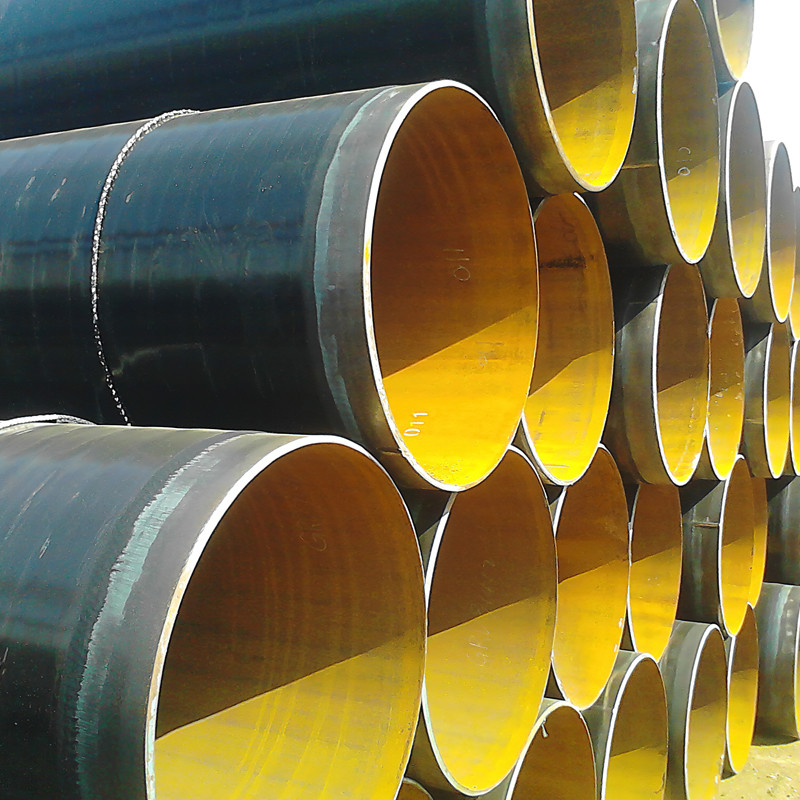
For extreme conditions, deep processing options like 3PE (three-layer polyethylene) coating provide an impermeable barrier against soil corrosion and moisture. Other critical finishing steps include the application of transparent anti-rust oils for transit protection and specialized threading or grooving for seamless integration into existing piping networks. The ability to customize these treatments—ranging from beveled ends for welding to plastic-capped plain ends—ensures that the tubing arrives ready for immediate installation without further field modification.
Industrial Application Scenarios and Integration Requirements
The versatility of round steel tubing allows it to serve as the backbone for various critical industries. In the energy sector, API 5CT and API 5L pipes are utilized for OCTG and linepipe projects, where the ability to withstand internal pressure and external soil loads is paramount. In fire-fighting systems, ASTM A53 pipes are the standard due to their reliability and ease of installation in high-pressure sprinkler networks. The precision of the outer diameter (ranging from 20mm to 508mm) ensures that these components fit perfectly within engineered brackets and valves.
In the automotive and machinery manufacturing sectors, high-strength structural pipes are used to create chassis and frames that require a high strength-to-weight ratio. Meanwhile, in the chemical industry, the use of stainless steel tubing prevents contamination of the transported media and resists the aggressive nature of acids and alkalis. Whether it is a pipe pile for a trestle bridge or a support frame in a mine tunnel, the alignment of material grade, wall thickness (1mm to 12mm), and surface treatment is what determines the engineering success of the project.
Comparative Analysis of Tubing Specifications by Application
| Application Sector | Recommended Material | Typical Standard | Surface Treatment |
|---|---|---|---|
| Oil & Gas Linepipe | API 5L (X42 to X70) | API / ASTM | 3PE Coating |
| Fire Fighting Systems | A53 / Q235 | ASTM A53 | Hot-Dip Galvanized |
| Cryogenic Transport | A333 Gr.6 / 09MnNiD | ASTM / GB | Anti-rust Oil |
| Structural Framework | Q345 / St52.4 | EN10219 / GB | Black / Galvanized |
| Chemical Processing | 316L / 304L Stainless | ASTM / DIN | Pickled & Passivated |
Critical Evaluation Criteria for Sourcing Industrial Tubing
When evaluating steel round tubing suppliers, procurement professionals must look beyond the unit price and focus on the "total cost of ownership." A lower initial price may be offset by higher failure rates if the material consistency is poor or if the galvanizing layer is uneven. Verifying certifications such as ISO9001, CE, and UL is a primary step in ensuring that the manufacturer adheres to rigorous quality control processes. These certifications indicate that the production line can maintain tight tolerances on wall thickness and diameter across large batches.
Furthermore, the capability for deep processing is a significant value-add. A supplier that can provide in-house threading, grooving, and U-shape processing reduces the need for multiple vendors and minimizes the risk of damage during secondary transport. Technical buyers should also request Mill Test Certificates (MTC) to verify the chemical composition and mechanical properties of the steel, ensuring that the delivered product matches the engineering specifications required for the specific pressure and temperature ratings of the project.
Future Trends in Pipeline Engineering and Material Innovation
The trend in steel tubing is moving toward "intelligent" procurement and higher precision. With the rise of modular construction, there is an increasing demand for pipes that are pre-fabricated to exact designs, reducing on-site welding and labor costs. We are seeing a shift toward more sophisticated alloy compositions that offer better corrosion resistance without the weight penalty of thicker walls. This is particularly evident in the transition toward more sustainable infrastructure where material efficiency is key to reducing the carbon footprint of the project.
Additionally, the integration of advanced coatings, such as hybrid epoxy-polyethylene systems, is extending the service life of underground pipelines in highly aggressive soils. As international projects become more complex, the role of the supplier is evolving from a simple commodity provider to an engineering solutions partner. The ability to customize products based on buyer drawings while maintaining adherence to global standards like JIS and DIN will be the primary differentiator in the coming decade of industrial manufacturing.
Frequently Asked Questions Regarding Industrial Steel Tubing
What is the difference between hot-dip galvanizing and cold galvanizing for steel pipes?
Hot-dip galvanizing involves submerging the steel in molten zinc, creating a thick, durable metallurgical bond that provides superior corrosion resistance for outdoor and underground use. Cold galvanizing is a spray or dip process using zinc-rich paint, which offers a thinner layer and is generally used for touch-ups or in less corrosive environments.
Which material grade should be used for ultra-low temperature piping?
For cryogenic or ultra-low temperature applications, materials such as ASTM A333 Grade 1, 3, or 6, and grades like 09MnNiD are recommended. These steels are specifically treated to maintain their toughness and prevent brittle failure at temperatures well below freezing.
How do I choose between API 5L and ASTM A53 standards?
API 5L is specifically designed for linepipe used in the transport of oil, gas, and water, emphasizing pressure containment and weldability. ASTM A53 is a more general standard often used for mechanical and piping applications, such as fire-fighting systems and low-pressure conduits.
Can round steel tubing be customized for specific project designs?
Yes, professional suppliers can provide customization based on buyer drawings. This includes specific wall thicknesses (1mm to 12mm), outer diameters (20mm to 508mm), and deep processing such as threading, grooving, and U-shape bending.
What certifications are most important when sourcing industrial pipes?
ISO9001 ensures general quality management, while CE and UL certifications demonstrate compliance with safety and international standards. For specific industries, API certifications are critical for the oil and gas sector to ensure the pipes can handle high-pressure transport safely.
What are the common pipe end treatments available for shipping?
Common treatments include plain ends, beveled ends (for welding), threaded ends, and grooved ends. To protect the internals during transit, pipes are typically capped with plastic protectors on both ends.
Technical References and Industry Standards
- American Petroleum Institute (API) Technical Standards
- ASTM International - Material Specifications for Steel Pipes
- ISO Quality Management Systems for Manufacturing
- DIN German Institute for Standardization - Piping Norms
Ensuring the reliability of your infrastructure starts with the precision of your components. By aligning material grades and surface treatments with your specific operational environment, you can maximize the lifespan of your system and reduce maintenance overhead. Contact our technical team to discuss your specific requirements and obtain a tailored solution for your project.
Related Technical Insights



 English
 Arabic
 Bengali
 China
 French
 German
 Hausa
 Indonesian
 Italian
 Japanese
 Javanese
 Malay
 Persian
 Portuguese
 Punjabi
 Russian
 Spanish
 Swahili
 Telugu
 Vietnamese